★★★☆☆3.8(398 reviews)
Christmas Plaid Backgrounds
A Designer’s Real-World Check Before Stitching
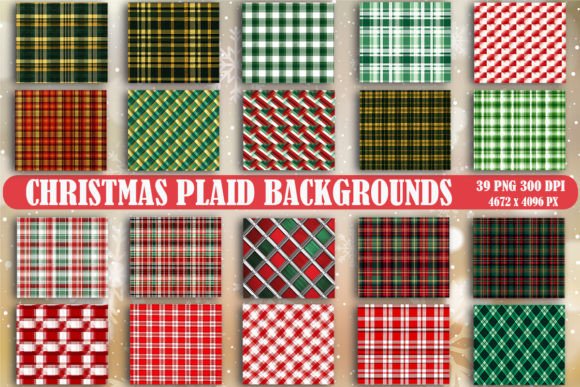
I pulled up Christmas Plaid Backgrounds last week while prepping a holiday batch of embroidered canvas tote bags for my local boutique client. Not as a “pretty preview” — but as a working asset I’d need to stitch cleanly, scale confidently, and sell with full confidence. That’s how I treat every background design: less as decoration, more as structural foundation. And this one? It landed right in that sweet spot between nostalgic charm and embroidery-ready clarity.First Impression: Warm, Rhythmic, and Surprisingly Versatile
Christmas Plaid Backgrounds doesn’t shout. It hums — a steady, confident rhythm of intersecting red and green lines forming clean, balanced tartan squares. The spacing feels intentional: wide enough to avoid visual clutter when stitched, tight enough to read as “plaid” even at modest sizes. There’s no ornate border, no forced snowflakes or bells — just pure, repeatable pattern energy. That makes it unusually flexible. I immediately pictured it behind a simple monogram on a baby blanket, framing a stitched “Joy” on a kitchen towel, or serving as the base layer beneath an applique reindeer on a sweatshirt. It reads as traditional without leaning into cliché — think cozy farmhouse kitchen, not department-store shelf wrap. That authenticity matters. When your customer unwraps a handmade item, they’re not just buying fabric and thread — they’re buying intention. Christmas Plaid Backgrounds supports that feeling.Where It Shines (and Where It Asks for Extra Care)
In real embroidery use, this background excels where structure and repetition matter most:
- Embroidered tote bags and aprons: The consistent scale holds up beautifully across broad, flat surfaces. No distortion, no awkward cut-offs at seams.
- Sweatshirt and fleece embroidery: Its open, breathable layout avoids excessive stitch density — critical for thick, napped fabrics that can trap heat and distort under heavy fills.
- Patches and pillow covers: Clean edges and predictable repeats mean sharp corners and seamless tiling, especially when trimmed or bordered.
- Personalized gifts and nursery decor: Paired with soft lettering or minimalist motifs, it adds seasonal warmth without overwhelming delicate themes.
But — and this is where experience kicks in — Christmas Plaid Backgrounds isn’t magic. It asks for thoughtful handling in these situations:
- Small hoop sizes (under 4”): You’ll need to crop thoughtfully. The pattern’s integrity relies on seeing at least 1.5–2 full plaid repeats. Tight crops risk looking like random stripes, not tartan.
- Thin or stretchy fabrics (like jersey or lightweight cotton voile): Use cutaway stabilizer generously. Without support, those straight-line intersections can pucker or shift during stitching.
- Dark or textured fabrics: Test thread colors early. Red-on-black can mute; green-on-navy may vanish. A light satin stitch over fill areas helps lift contrast — but only if your machine handles layered stitches smoothly.
- Curved surfaces (caps, beanies, curved pillow fronts): Avoid placing the full repeat across high-curve zones. Instead, use a centered stripe or partial repeat to maintain readability.
What It Does for Your Finished Product — Beyond Looks
This isn’t just about “does it look nice?” It’s about what Christmas Plaid Backgrounds does for your brand and buyer trust.Practical Designer Notes Before You Stitch
Before loading Christmas Plaid Backgrounds into your embroidery software or sending it to production:- Always test on scrap fabric — especially if using a new stabilizer combo or thread brand. Watch how the lines hold their crispness after washing.
- Check stitch density. If your version includes dense fill areas (not just outlines), confirm it won’t overwhelm lightweight fabrics or cause stiffness in baby items.
- Review hoop size compatibility. Some plaid backgrounds are built for 5x7 hoops — others scale better for larger commercial formats. Know your limits before digitizing adjustments.
- Inspect small details — particularly where lines intersect. Do corners stitch cleanly? Or do they feather or double-stitch unnecessarily? That affects both appearance and wear.
- Test black-and-white mockups. If you plan to offer digital previews for clients, ensure the pattern remains legible in grayscale — crucial for email thumbnails or printed catalogs.
- Confirm licensing. Since Christmas Plaid Backgrounds falls under Graphics and Backgrounds, verify whether your intended use — especially for resale of finished embroidered goods or inclusion in digital product bundles — is covered. When in doubt, reach out to the creator.
Final Thought: A Quiet Workhorse, Not a Flashy Gimmick
Christmas Plaid Backgrounds won’t go viral for being “trendy.” It won’t win awards for complexity. But it will reliably anchor dozens of holiday projects — from a single embroidered patch for a child’s backpack to a full run of boutique aprons — with quiet confidence and craft-level integrity.
⬇️ Download Free
Free download · No sign-up required
🔗 You Might Also Like
Backgrounds
First Impression: Warm, Authentic, and Instantly Seasonal Opening the Fall Color...
Backgrounds
As a graphic designer who’s built brand identities for over a dozen handmade bus...
Backgrounds
First Impressions: Warm, Textured, and Instantly Seasonal Opening the Knitted Ch...
Backgrounds
A Festive, Friendly Backdrop That Feels Handmade—Not Stock Opening 3D Christmas ...
Backgrounds
As a brand designer who’s helped over 70 local businesses refine their visual id...
